Six robots ran a Shanghai store for 24 hours. Four passed.
AgiBot put six G2 robots to work in a real convenience store for a full day and night, livestreamed to two million viewers. Four met the bar, two did not.
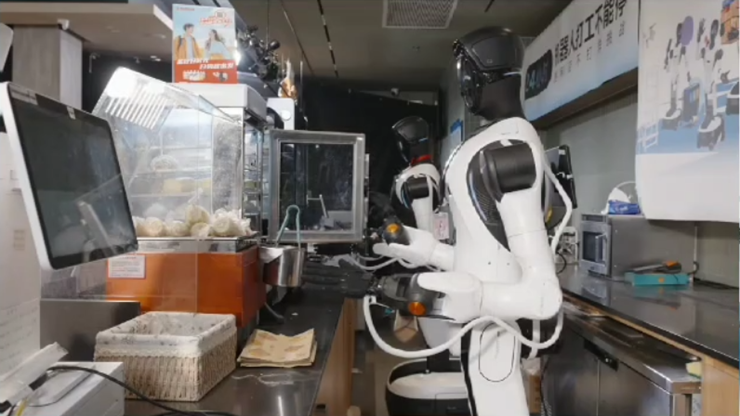
Six AgiBot G2 robots, humanoids on wheels, worked a real convenience store in Shanghai's Xuhui district for 24 hours, from 10 in the morning on 2 November to 10 the next day. More than two million people watched the livestream. Between them the robots handled 1,730 tasks: helping customers, fetching products, making 147 coffees, serving 126 breakfasts, checking and restocking shelves 277 times, and wiping tables.
What the test looked like
Each robot had its own job: customer help, shelf inspection, restocking, coffee, checkout and hot food, cleaning. The day was split into a lunch rush, an evening peak, an overnight shift and the next morning's breakfast rush. Two evaluators tried to trip the robots up. They ordered a regular and a sugar-free Coca-Cola to see if the robots could tell near-identical cans apart, moved packs of chewing gum around on a shelf and asked for them to be put back, and blocked an aisle with a person and a box.
Why it matters
Four of the six passed the final assessment. Two did not meet all the criteria. That ratio is the honest number in this story. A controlled demo is one thing; a shop with real customers, an overnight shift and people deliberately messing with the shelves is a different test. The trial closed AgiBot's AI WAVE showcase, which started on 22 October with releases on data, simulation, models, hardware and the software to run it all. The store was where those pieces had to work together.