AGIBOT proposes Worken to count the autonomous work robots actually do
AGIBOT introduced Worken at Innovation Day 2026, a formula that multiplies active robots, autonomous hours and output efficiency to gauge productive robot work.
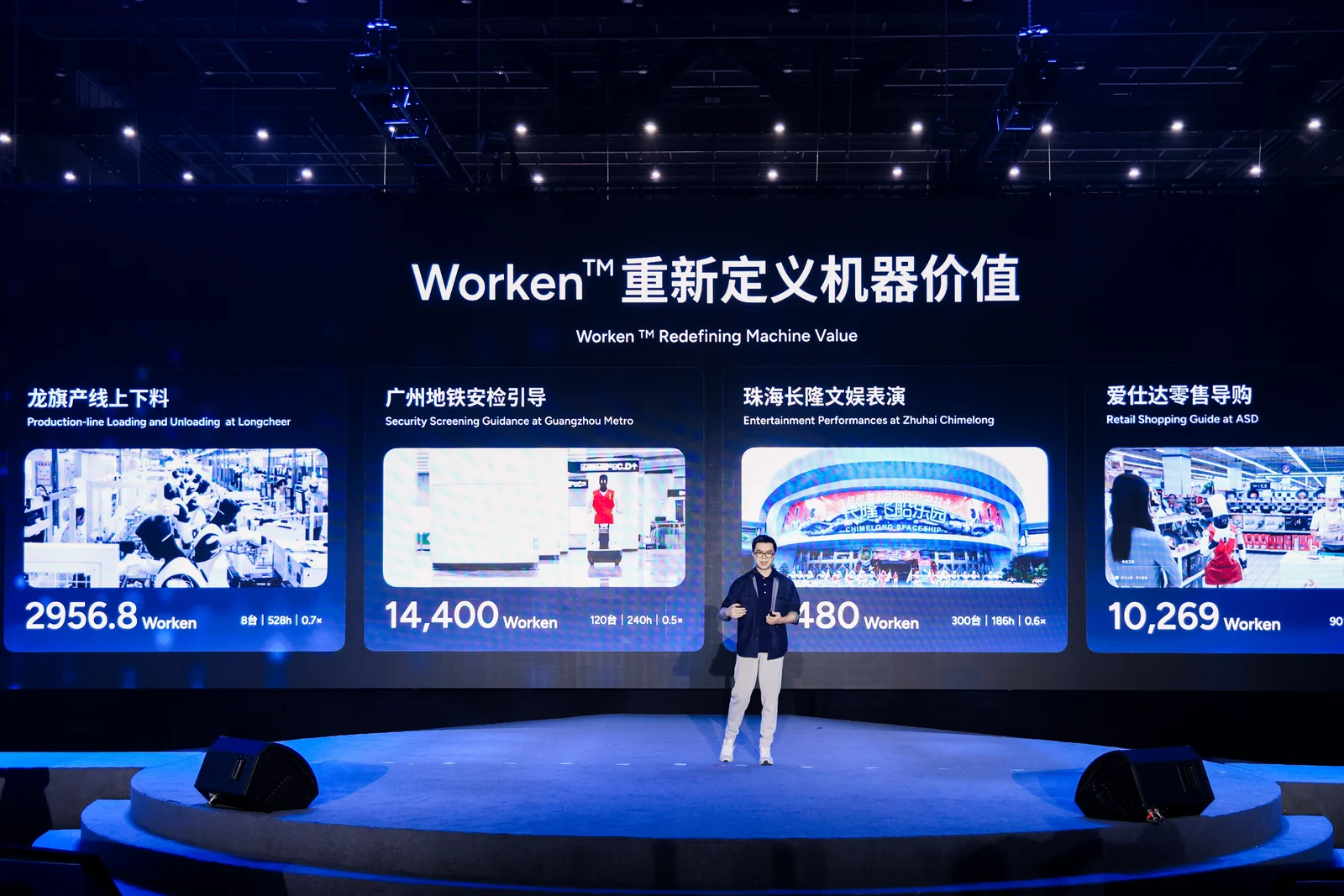
AGIBOT has proposed a new way to measure what deployed robots actually accomplish. Called Worken, the measure was introduced at the company's Innovation Day 2026 and is described as "Effective Intelligent Work Hours." The name blends "Work" and "Token."
The formula multiplies three factors: the number of robots actively working, the hours they operate autonomously, and an output efficiency ratio compared with a benchmark for the task. Time spent powered on but waiting, or being helped by a person, does not count. AGIBOT gives a hypothetical example: 10 robots working six autonomous hours each at a ratio of 0.8 would equal 48 Worken. That figure is an illustration, not a result from a real deployment.
AGIBOT stresses that Worken is not a price for robot labor, and equal scores on different tasks do not carry equal financial value. It names industrial material handling, including at Longcheer, as a place to develop the method, but it has published no measured Worken result for that site.
Why it matters
Counting installed robots says little about whether they are useful. A measure built on independent working time and acceptable output could show whether software updates improve a fleet without adding machines. Still, Worken is only AGIBOT's proposal, not an industry standard. Watch for clear rules on which hours qualify, how benchmarks are set, and whether AGIBOT or its customers publish real operating data.